

There is no trophy best trading strategy. A top-10 that mixes day trading, dollar-cost averaging, and “value investing” is how you pick a method you will never measure. The setup that pays a futures scalper is the wrong tag for a swing trader who logs six stock trades a week.
This page is about tagging, not trophies. First, how to name a setup so next month’s review is comparable. Then five styles you can journal: momentum, mean reversion, breakout, swing, and day trading. Then how to know a tag still has expectancy — and when to retire it. Investopedia’s trading-strategy overview is background.
If you need the journal fields, start with what a trading journal is. Cadence: why every trader needs a journal. Forex-only methods: best forex trading strategies. Market hubs: trading journal and stocks.
How to tag the best trading strategies (so you can measure them)
A strategy you cannot filter is a story. “I trade momentum” is not a tag. MOM-ORB and MOM-flag are tags. The job of the label is to let you answer: does this setup pay after enough samples, and did I follow the plan?
Use four rules. Ignore the rest of the playbook until they exist.
- One name, every time.
ORB,opening range, andOR breakare three strategies in a pivot table. Pick one string and stop inventing synonyms after a red day. - Tag the decision, not the ticker. AAPL long and NVDA long with the same rules are one setup. Mixing “tech” as a strategy with “breakout” as a strategy is how P&L lies.
- Write the invalidation with the tag. Without a stop you cannot talk in R. Without R you cannot compare a 0.3R scratch to a 2R runner. Size belongs in risk management.
- Grade the setup and the execution separately. An A-setup with a C-exit is not proof the strategy is broken. A C-setup you traded perfectly is not proof it works.
A trading plan is the rules before you trade. The tag is how you see whether you actually used them. Backtesting is how you check a rule on history. The journal is how you check the same rule on your fills.
Best trading strategies compared (as tags, not trophies)
These five are the ones that show up in a discretionary journal. They are not ranked. Complexity and screen time decide the fit; expectancy decides whether you keep the tag.
| Tag (example) | Best fit | Dies when | Log besides the fill |
|---|---|---|---|
Momentum (MOM) |
Fast markets, liquid names | Chop; you hold a faded move | Time of day, volume vs average |
Mean reversion (MR) |
Range-bound sessions | A real trend starts | Distance from mean, “fade vs chase” |
Breakout (BO) |
Compression then expansion | False breaks, no follow-through | Volume on the break, first pullback taken/skipped |
Swing (SWING) |
Multi-day holds, part-time hours | Overnight gaps you did not plan | Hold overnight? yes/no; gap vs stop |
Day trade (DAY) |
Intraday only, no overnight | You keep positions into the close “just this once” | Session, trade count vs your cap |
Skip mixing dollar-cost averaging and buy-and-hold value into this list. Those are investing schedules, not trade tags. Pair trading and full algo books are specialist stacks — journal them only if that is actually your job. Paper trading counts if you use the same tags you would live.
Momentum
Momentum assumes a move in motion stays in motion long enough to pay 1R or more. You are not buying because it is cheap. You are tagging a continuation. The leak is holding after the impulse dies, then renaming it “position trading.”

Pick it if you will exit when the tag’s invalidation hits — not when hope returns. Skip it if you need a high win rate to stay calm; momentum usually pays in R, not in win percentage. Related pattern language: day trading chart patterns.
Mean reversion
Mean reversion fades an extended move back toward a mean you defined before entry (a VWAP, a range midpoint, a moving average you actually use). The leak is fading a breakout and calling it “value.” If the mean is gone, the tag is wrong.
Pick it in ranges. Skip it the day your journal already shows three failed fades in a trend. That is data, not a vibe.
Breakout
A breakout tag is compression, then a close beyond the level with the volume or range expansion you wrote in the plan. The leak is entering the first tick through the level and calling every wick a break.
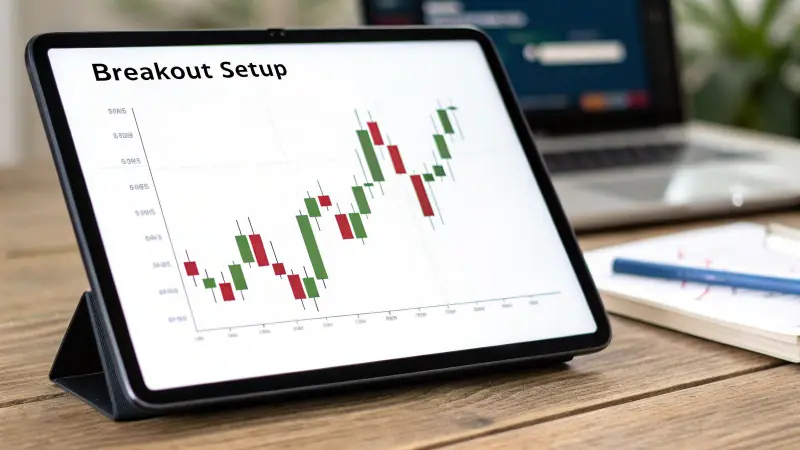
Pick it if you can sit through false breaks without doubling size. Skip it if your log shows you chase the third fakeout. Volume and time-of-day belong on the row; they are how you tell a real expansion from noise.
Swing vs day trading
These are holding tags, not entry mechanics. You can swing a momentum setup or day-trade a breakout. Do not use SWING and MOM as synonyms.
- Swing: thesis lasts days. Overnight gap is a planned risk, not a surprise. Fine if you cannot watch the open.
- Day: flat by the close. The leak is “it looks good into the bell.” If the close is the invalidation, log it that way.
Intraday frequency that is really scalping — seconds to a few minutes, dozens of fills — is a different tag and a different cost problem (commissions eat R). That definition is what scalping trading is. Do not dump scalps into DAY or your win rate and average hold time become fiction.
How to know which strategy is actually best
The best trading strategies for you are the tags that still have expectancy after a real sample, with your execution. Lifetime P&L hides a dying setup inside a lucky year.
Use three checks. None of them is a YouTube win-rate screenshot.
- Sample per tag, not per account. Rule breaks are useful from week one. Per-setup win rate and expectancy need roughly 30 trades in that tag before one outlier stops lying. Blending
MOMandMRinto one number is how both look “fine.” - Plan-followed rate next to P&L. A green
BOmonth with four moved stops is not a breakout edge. A redMRmonth of −1R stops that matched the plan is information about the range — not a reason to delete the tag on Tuesday. - One decision at the weekly review. Keep / pause / retire one tag. “Be more disciplined” is a diary. “Pause afternoon ORB until 20 more trades; keep morning pullback” is a journal. Cadence: why every trader needs a trading journal.
If typing fills is why you skip tags, that is a tooling problem, not a strategy problem — how to choose a journal when logging time is the bottleneck.
When to retire a tag
Retire (or pause) when the journal shows a pattern you can name, not when a week felt bad.
- The setup’s expectancy is negative after enough trades in that tag, with stops that matched the plan. Journaling will not invent an edge. It will measure the leak.
- You cannot follow the rules. If plan-followed is 40% on
BO, you do not have a breakout strategy. You have a breakout idea. Fix execution or pick a slower tag. - Regime change you can see. Mean reversion in a trend month; momentum in a two-week range. Pause the tag. Do not silently relabel losers.
- Costs ate the edge. Day and scalp tags die first when commissions and slippage are not on the row. Net P&L after fees, or the tag is a vanity metric.
Do not replace a retired tag with a new synonym (BO2, true breakout) to reset the sample. That is how people journal forever and never learn.
Frequently Asked Questions
What is the best trading strategy in 2026?
The one whose tag you will still open on a red week, and whose expectancy you can read after ~30 samples. There is no universal winner. Fit (time, overnight risk, temperament) picks the candidate; the journal keeps or kills it.
How many trading strategies should I run at once?
One or two tags until each has a sample. Five parallel “systems” is how every loss gets a new name. Add a third only when the first two have a written keep/pause decision.
Is day trading better than swing trading?
They answer different calendars. Day trading removes overnight gap risk and adds screen time and costs. Swing trading does the reverse. Compare your DAY tag to your SWING tag — not a blog ranking.
Do I need a different strategy for stocks vs forex?
The tagging job is the same; the sessions and costs are not. Stock-specific logging: stocks journal. Forex methods and sessions: forex strategies and the forex journal.
Can a journal create a best trading strategy?
No. A journal measures the process you already have. It will not turn a negative-expectancy tag into an edge. It will show you faster that you should stop.
Bottom line
The best trading strategies are not a ten-row trophy table. They are named tags — momentum, mean reversion, breakout, swing, day — logged the same way every time, reviewed until one weekly decision is obvious. Skip DCA-as-a-strategy. Skip renaming losers. Keep the tag that still pays after a real sample, with the plan actually followed.
Write the next five trades with one setup name and a stop. When you want those tags in an app instead of a sheet, open the journal and log them before you add a sixth strategy.
This article is for education, not investment advice. Past setups do not guarantee future results. A journal measures process; it does not create an edge.